Sunday, August 3, 2014

Grilled Cheese

Recently I've been having a craving for comfort food. And by comfort food I don't mean food, per se, but culture. Comfort literature, comfort music, comfort ... films?

Yes. Oh, yes. All of which leads me back to The Devil Wears Prada (2006).

Originally a book written by Lauren Weisberger, the film chronicles the life of Andy Sachs, a recent college graduate who goes to work for Runway magazine--a stand-in for Vogue--as the assistant of the Editor-in-Chief. Anne Hathaway is Andy, and the Editor-in-Chief is played by Meryl Streep. Who, if you extrapolate, is a stand-in for the real Editor-in-Chief of Vogue. Are you kind of getting the picture?

I think I am.
As a movie it's very nice, very chic, and so incredibly over the top. Andy, confused journalism fuzzball, has a sweet, cute boyfriend and all the ambition in the world. She would never take advantage of anyone! Ever! That Anne Hathaway has extraordinarily large eyes makes everything she says seem more earnest and believable, if slightly cloying.

Fortunately it's also very, very funny. What elements aren't generalities--the GBF, the anonymous NYC streets--are, rich, precise and cutting.


The subject matter is almost beside the point; as a non-fashionista I still find the references hilarious. Meryl as Miranda is as wonderful as you would expect, redheaded Emily Blunt isn't bad, and did I mention the cute boyfriend, Adrian Grenier? What the movie lacks in character it more than makes up for in substance.

Like gourmet macaroni and cheese, you know it's not very good for you, but it's simply too delicious to pass up. I mean, there's a supermodel cameo, ferchrissakes.

"Serena"
Not everything about The Devil Wears Prada is good. Some parts positively creep me out (Christian Thompson, I'm looking at you), and I will never appreciate the message that the number '4' is better than the number '6.' On the whole, though, it's worth spending some time on--one hour and 46 minutes' worth, to be exact.

*

One more thing for today: I've been thinking about the best way to send out notifications for when the blog is updated--right now I send out updates via my Twitter but for those not so twitterpated, what do you think of a Facebook fan page? Or an email listserv? If you have an opinion on the matter drop it in the comments below.

Thanks.

That's all.

Sunday, July 27, 2014

The End of Summer

It's the end of July and outside today the sky is dark, so it seems fitting to finally cover summer movies. There are two kinds: movies where summer is the theme, and movies where summer sets the tone. (I will continue to happily ignore summer blockbusters.)

Adventureland (2009) is one of the former. Jesse Eisenberg is James, a young college graduate who plans to spend the summer traveling Europe. Instead he ends up working at an amusement park.

That's it. That's the entire set-up.

Here, have a shot of the amusement park.
The first time I watched this it felt perilously normal. There's a teen party scene halfway through which I'm pretty sure is when I turned it off.

LET ME SAY NOW, that was a mistake. As I've lately discovered, the second half of Adventureland is brilliant. It takes all those traditional loose ends and ties them up somewhere you wouldn't expect, thanks to some character-driven plotting and a hilarious supporting cast.

You kind of even believe that the lead actress, Kristen Stewart, is acting.

I flip my hair back and forth
So that's summer film #1. Amusement parks, corn dog jokes, dick jokes, triangulation, Eisenberg's hair--whatever you're nostalgic for, Adventureland will suit your needs. (Just don't ask for the giant ass panda.)

*

Renoir (2013) is a more recent addition to the summer genre. Mainly in that it's set in the summer of 1915 on the French Riviera. Entire minutes are dedicated to the lushness of the surrounding foliage as model Andrée (Christa Teret) lounges around for aging Impressionist Pierre-Auguste Renoir and seduces his son, Jean. This is the actual Andrée:

Blonde a la rose
Perhaps the most interesting thing about this film is the backstory. Jean Renoir became a famous filmmaker whose films--including La Grande Illusion (1937) and The Rules of the Game (1950)--remain among my favorites from my film studies classes. Yes, I minored in Film Studies. I'll give you a moment.

Take two.
Renoir itself is slow, but it's so beautifully shot you don't really care. Stuck on the Renoir property, any and all happenings--the Great War, the workings of greater society--flow around the film without sticking. And yet it is a question of the real world--the question of what Jean will do as a profession--that proves the sticking point.

Like Adventureland, Renoir captures a moment in time alongside a coming of age. It just happens to be a time that none of us remember.

*

Not feeling summery? Watch Under the Skin (2014). I liked parts of it, though I have been reliably informed it is depressing.

Till next week, au revoir.

Monday, July 21, 2014

Soccer, Shakespeare, and Its Discontents

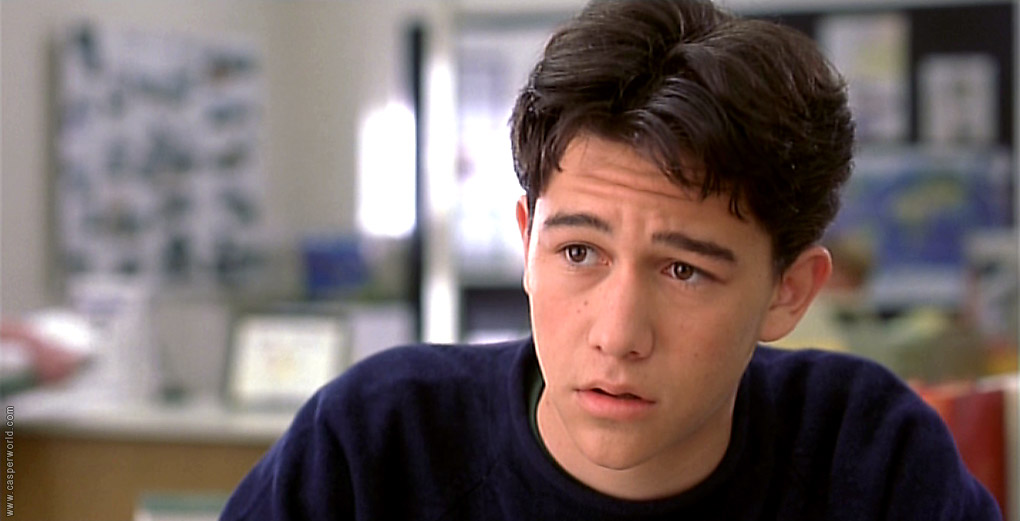
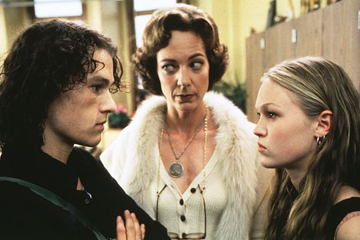
Last week I said I was going to cover 10 Things I Hate About You (1999). Set in modern-day Seattle and loosely based on Shakespeare's The Taming of the Shrew, it stars Julia Stiles and the late Heath Ledger, along with a very, very young Joseph Gordon-Levitt.

He's adorable.
The only problem is that I wasn't sure how to cover 10 Things I Hate About You. You know Tolstoy's maxim about how all happy families are alike? That also holds true for movies.

Good movies are good for a very specific set of reasons. Bad movies, on the other hand, are each bad in their own way. And because About You fulfills some stereotypes of a "bad" rom com--that it's geared toward the teen market, essentially--I thought it would be useful to compare it to another Shakespearian adaptation, one from a similar time period that also happens to feature a soccer-playing lead. I'm talking, of course, about She's the Man (2006).

Nooo, I would never play off World Cup mania.
Twelfth Night, She's the Man's source material, is the bratty little sister of Shakespearian comedies. Fittingly, the adaptation stars Amanda Bynes, the actress formerly known as Amanda, Amber, Penelope, Courtney, Cynthia, and Melody on The Amanda Show

In She's the Man Viola (Amanda Bynes) is a soccer player who after a series of correspondingly wacky circumstances ends up impersonating her brother in order to play yet more soccer. [Sidenote: If you go from 10 Things I Hate About You, to She's the Man, to Bend It Like Beckham, it's like soccer inception.]

Both movies deal with hidden identity. In About You, Ledger's character Patrick Verona is paid to go out with Kat; in She's the Man, no one knows that Viola is actually a girl. The difference is that She's the Man treats the story as a farce, dealing with the issues of cross-dressing and gender-bending through slapstick style comedy. There are no real consequences and no one, least of all the main character, is taken seriously.

About You takes everyone seriously. All the players--the stoner boys, the pretty girls, the model, the criminal--have a raison d'être.

See skipping, singing.
Like She's the Man and many other teen rom coms, it trades in stereotypes. The difference is that it also acknowledges and confronts those stereotypes. As teacher Mr. Morgan opines: 
I know how difficult it must be for you to overcome those upper middle class years of suburban oppression. Must be tough. But the next time you storm the PTA crusading for better lunch meat or whatever it is you white girls complain about, ask them why they can't buy a book written by a black man.
It meets the players where they are and then demands more of them. This element, along with a script that deals with the misogyny of Shakespeare's original comedy in a more useful way, makes the resulting film seem genuine. By recognizing that a part of taking someone seriously is dealing with their identity in an honest way, it validates every respective choice.

(It also includes the greatest serenade ever.)

10 Things I Hate About You's message is that what's on the inside is what matters, not what is on the outside--almost the opposite of She's the Man, where Duke won't date Viola until she's a confirmed girl. It all comes down to the opening song: I don't give a damn about my reputation


Now go rent 10 Things I Hate About You, and when you do, throw popcorn at the screen in my honor.

Saturday, July 12, 2014

The Proposition of Romance

Two weeks ago I posted about Blue Valentine, and in the meantime received some feedback that I thought deserved serious consideration. The comment was that Blue Valentine was not a romantic comedy.

I just googled "Ryan Gosling crying," this is so not on me
I had to admit that this was true. No matter how romantic or comic I personally think Blue Valentine is, it does not qualify as a romantic comedy--and yet I wrote about it on this blog, which is ostensibly about the rom com. So I decided to take a step back and consider what I have actually been trying to articulate, and what the true focus of this project really is.

What I came to realize is that what I love about romantic comedies is neither the romance nor the comedy. It's sadness. And I'm not talking about the romantic comedies that seem to have been made to be deliberately sad, like say While You Were Sleeping (1995), where the main plot regards Sandra Bullock and a guy in a coma.

Sidenote: why does every rom com from the '90s take place in Chicago? Why?
If someone can answer this question I promise to never move there.
I'm talking about dualities. In good movies lightness is tempered by darkness, each action having an equal but opposite reaction. Most importantly, there is a core of truth underpinning the story's dramatic structure.

This is precisely what is missing from most romantic comedies. They are meant to be the happiest movies in the world. There's a reason that Shakespeare's comedies end in weddings; these stories have a natural dramatic arc where the climax is literally a happy union. Unfortunately this means that many are predictable from the start. We know the main couple is going to end up together; they know they're going to end up together. 

But change--change is good. Change can make all the difference. Stories where this doesn't happen: now that's interesting. I'd argue that the best romantic comedies are ones that don't particularly care about being comedies, or don't particularly care about being romantic. Even a movie full of light needs some negative space.

I believe the movies I've covered so far--Pride and Prejudice, Heathers, SPEED, Thelma & Louise, and yes, Blue Valentine--all fit into this category. I mean, do you remember the scene in the rain from P&P? (The Wedding Date is the exception. Sorry, The Wedding Date.) Starting now, I want to highlight these exceptions more deliberately. The results should surprise and amuse you. 

Next up, a Shakespearian comedy.

Bet you can guess.

Tuesday, July 1, 2014

Blueness

It's officially July, which means it's time to celebrate, in order, patriotism, weddings, and Fake Christmas. In honor of all of that I'd like to showcase Blue Valentine (2010).

Directed by Derek Cianfrance, Blue Valentine is a film about a marriage. Dean and Cindy meet, fall in love; marry, and fall out of it. The divide between the two points is crucial to the film, as is a certain blueness written into script and the imagery.

Image source: http://moviestorrents.net/wp-content/uploads/2013/03/Blue-Valentine-2010.jpg
In this way Cianfrance has constructed a film with the circular quality of perpetual, long-lasting arguments--going around and around. The differences between the two timeframes are otherwise largely circumstantial: Dean's thinning hairline; Cindy's nurse uniform. (The exception is the presence of their child, Frankie.) Their struggles are constant and impenetrable.
As you might imagine, the film carries a tremendous sadness.

Image source: http://www.filmcaptures.com/wp-content/uploads/2013/12/Blue_Valentine_28.jpg
There is no forever love. What love there is, is desperate, quiet--

Image source: https://blogger.googleusercontent.com/img/b/R29vZ2xl/AVvXsEj1KISDanngmJIDU0lvcm7kE8JxXG3SxGNswqALGrUmbUlL4hczEGpb4lkWYJMPuXq_QOhws_tuz5GDkGO82Xzq3jrBIrGruGwzwLw1tLVRDNm5bydLDj29b6VakDM3NtgtiRsvTPe8Qi4/s1600/eGcyczV4MTI=_o_blue-valentine-trailer.jpg
Domestic.

Image source: http://ilarge.listal.com/image/2113095/968full-blue-valentine-screenshot.jpg
Through Dean and Cindy, the film presents not the love story, but a love story.  In the process it memorializes both.


Reading suggestion: "Flick Chicks," by Mindy Kaling

Sunday, June 22, 2014

American Roadtrip

Summer is cars. Summer is deep black asphalt and truckstops and the heat. Summer is Texas. Summer is Thelma & Louise (1991).

Ridley Scott's biggest follow-up after Blade Runner, Thelma & Louise regards the best friendship of the title characters, who set out on a two day getaway from their husband and boyfriend, respectively.

Here Geena Davis and Susan Sarandon are at the peak of their powers. It is difficult to tell them apart from real housewives and waitresses, not because they aren't beautiful but because that beauty is the work of maintenance.

Image source: https://blogger.googleusercontent.com/img/b/R29vZ2xl/AVvXsEhsBwdrjFgD55izvS50WVkbnHDtSZmfKdul_nU3_W_dleTB9bIRqSD_O8GufG85aUkwTpAhf3H5N2wVUO_Hi8_BM-REzQFvXz2OYrxCAW6qilROYEmhc0nPV2waiKtZOdc09HFix6fTGxHo/s1600/thelandlou1.jpg
1st Selfie.
In other words, their beauty is performative. Thelma's shown with curlers in her hair, Louise inspecting her makeup. Much like their domestic preparations--here Thelma is packing, here Louise is washing a dish--their appearances are broken down into a series of discrete steps.

This work makes them, in turn, more alike. In a movie devoted to the close up it can be difficult to tell them apart, never mind individuals within other groups of people: police officers in white collared shirts, women crowding together looking into a mirror. It's only when the rings and curlers come off that Thelma and Louise begin to seem unique.

Image source: http://www.phase-eight.co.uk/blog/wp-content/uploads/2013/08/thelma-and-louise.jpg
And yet this scenery remains an integral part of the film. Here is a southwestern accent, here is a Texas line dance, here is the Grand Canyon. I've never been to the latter, but I recognize the former. As the movie progresses and Thelma and Louise transform from housewives to outlaws, it's true that the more you know about the context, the less likely it is you'll need subtitles.

Sit back, relax, but keep your hat on--it's going to be a wild ride.

Friday, June 13, 2014

20 Years of SPEED

... So he was just saying, in the nicest way possible, "I'm not really interested." And then she was like, "Well, fuck you!" And he was like, "No, wait, wait," it was that kind of thing. And then he sent her flowers and all was forgiven. But I felt bad for her because she was in a bad spot; she wanted this film to work and she was getting nothing from him. So yeah, to me, she saves the film. He looks good but she saves it.
--Loyda Ramos, Hitflix 

Image source: http://www.moviestillsdb.com/media/pictures/m/37/37bf9ebe8c01077877b704eafacabbf2.jpg
I love the expression on her face.

How do we fall in love? Is it in the turn of a hip, the long glance, the speeding of our heartbeats? For Annie and Jack it is one punch. They’re stuck at the front of a bus, Annie (Sandra Bullock) driving while Jack, a twenty-nine-year-old Keanu Reeves, directs her on which way to go. Underneath them is a bomb set to go off when the bus slows below 50 miles an hour, or when the bomber gets angry enough, whichever comes first.

Much of SPEED (1994) is like that: waiting for the other shoe to drop. The setup is that a bomber has taken over a skyscraper, and is threatening to blow up an elevator full of hostages if he doesn't get his three million. This plan quickly derails as LAPD officers Jack Traven and Harry Temple play catch-up. "Will Mr. Guest please sign in?" Jack lobs at the elevator containing the bomber.

"What?" Harry replies. What, exactly. If Harry--a late thirties Jeff Daniels--is the older, slightly bumbling mentor, Jack is the protégé with the smart mouth, too clean cut to be a punk but too young and brash to be anything else. His first time up against the bomber--Dennis Hopper, crazy and wholesomely American--this heedlessness works. The second time, Jack watches a bus explode as the bomber tells him that another, numbered 2525, is set to go off a highway somewhere if he doesn’t manage to save it. 

That's where he and Annie meet. Her first words to him are, "Excuse me, are you out of your mind?"

Are we out of our minds? Yes, we are out of our minds. We're swept along just like the rest of them, traveling in a bus to the middle of nowhere (an airport) to watch nothing (fireworks, eventually). SPEED proves that an action thriller can spur the best kind of fools: young, naive, rushing in.

Image source: http://www.celluloidheroreviews.com/wp-content/uploads/2011/04/Keanu-Reeves-Speed-1994.jpg
There is an awkwardness between Reeves and Bullock familiar to anyone who has ever had a high school crush. Strangers at the beginning of the film, they slowly navigate around each other in a simulacrum of courtship. Every moment you're aware that they might not make it to the end of the movie--it might not last--but that's why you root for them.

It's true that she, who is funny and charming and fearless, saves the movie. But what you forget is that he goes down with her. And the moment they approach a fifty-feet gap in the road, with no alternate path and no way to slow down, they leap.

Image source: http://media.timeout.com/images/101217951/image.jpg
Or fall. Whatever.
Twenty years on, what strikes me about SPEED is how wonderful and pertinent it still is. True, their predictions for the future were mostly wrong; we have no “interactive TVs,” as the bomber claims we would, though in one surreal episode proto iPhones—pocket cameras—document the action. (Spoiler: a GIF stars in a plot twist.) 

The plot can be problematically contrived, such as when a bus driver appears on the scene just long enough to establish that he’s a friendly face in Jack’s life before dying. Some jokes don’t make sense. After an epiphany about how to save the hostages, Jack rushes toward the skyscraper’s roof, only for Harry to call after him, “We’re not going to shoot them, right?” Twenty seconds too late, Jack replies almost nonsensically, “No, we just take them out of the equation.”

But those flaws are balanced out by the unrelenting thrills and a smart, culturally savvy script. (The uncredited script doctor who wrote “98.9%” of the dialogue? Joss Whedon.) Merely stating the obvious can be a two-fold punch line, such as when Jack flags down a convertible in an effort to reach the bus. The driver, who is black, argues, “This is my car, I own this car, it is not stolen!” Taking out his gun, Jack replies, “It is now.”

Then there is the active cinematography courtesy of DP-turned-Director Jan de Bont, which leaves you feeling as though you’re both in the worst traffic jam of all time and not quite touching the ground, as in the moment an explosion pushes Jack through the air like a butterfly, weightless. In the process de Bont made a "Bruised Forearm Movie," as Roger Ebert referred to it, where the madness is the art.

Image source: https://blogger.googleusercontent.com/img/b/R29vZ2xl/AVvXsEg4IqHPXZQQEJkTA_kXNT8YNgtYasuxu5U1CidfoMojn1KgkTIWcsOjHlYKnoBHYAh56-qftHgW9XsDFoQdtt4tCbqv4rZbq-2LxPkpekxZMdgEw4-5NgRN9As71dRpGrb67g3a5wKDNRM/s1600/Speed_145Pyxurz.jpg
I dare you to try to interpret this image.
SPEED's release on June 10th put Reeves and Bullock on the cusp of stardom. Afterward Reeves, having proved he could action, would join The Matrix; Jeff Daniels play divorcee in indie darling The Squid and The Whale; Joss Whedon become Joss Whedon; and this--this was Bullock's big break. But in 1994 they were just starting to live those dreams.

There's a short clip on Youtube of that time, after the movie was finished and the press junket begun. Keanu still has his short hair, and he’s talking about Sandy when she suddenly runs into the room and crushes him in her arms. He laughs, and when she lets him go his first words are, “Nice blouse.”
“You think?”
“Yeah, nice.”
“How are you?”
“I’m pretty well,” he says.
“Okay,” she says. But it’s not a throwaway line. It’s clear that she heard him, in that distinct way you hear the people that matter to you. A moment later she’s gone. Focus back on the camera, Keanu smiles. “Et voila.”

It’s reminiscent of a scene in the movie after the bus has successfully jumped the gap. Rising out of his protective crouch, Jack turns to Annie, asking, “You okay?”
“Yeah. I’m okay.”
“Okay?” He asks again, breathless.
 “I’m okay, I’m okay,” she replies, touching her forehead. It’s bleeding a little, and Jack leans over her, holding his shirt over the wound. They’ve made it, and no one has ever been as glad to be alive.

Search This Blog